

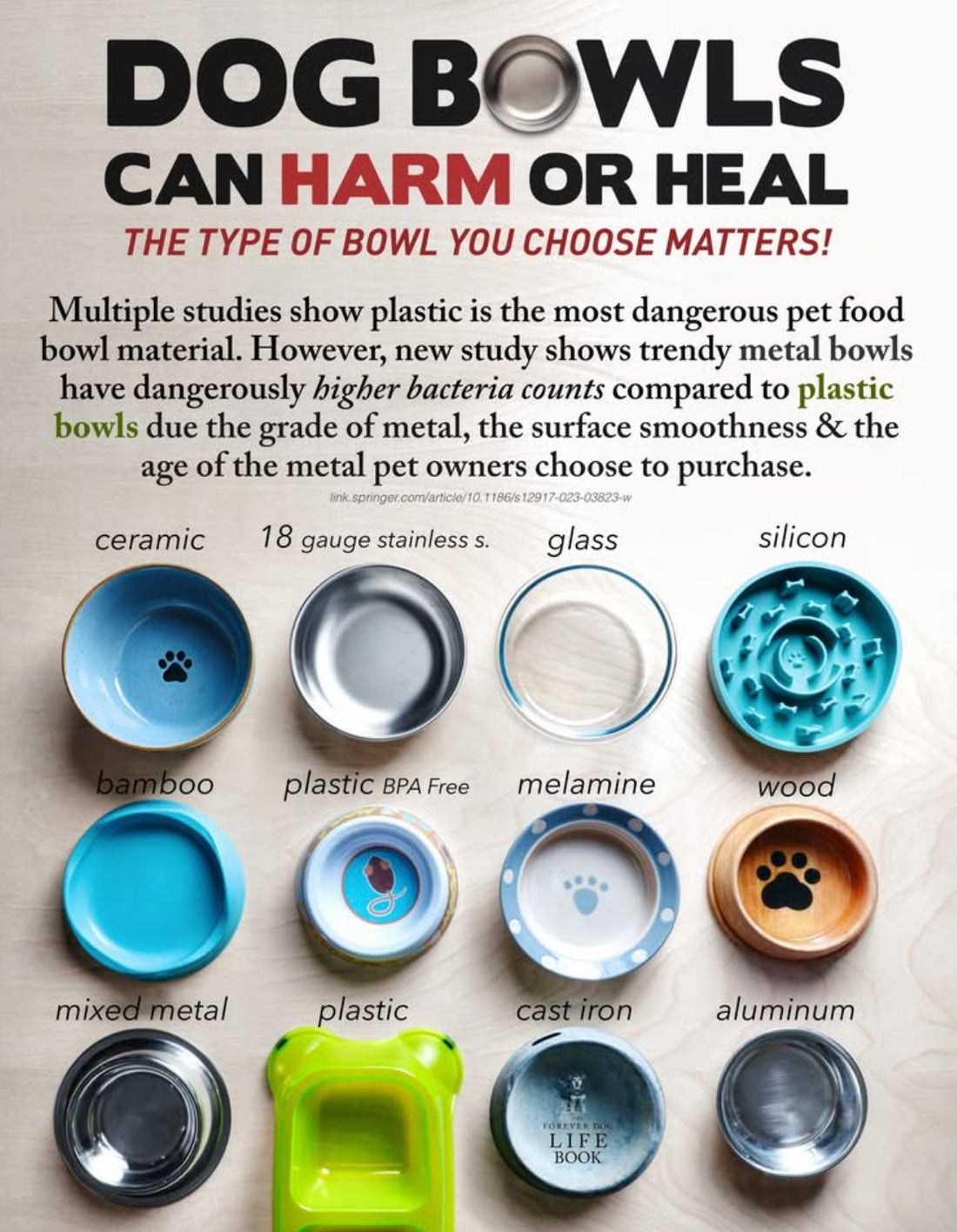

We love our pets like family—but did you know their food and water bowls might be one of the germiest spots in your home? Studies have shown that while most pet parents choose metal bowls (around 67% of us!), only about one-third actually wash them after meals. Many just give a quick rinse or wipe… and that’s exactly how a microscopic “bacterial party” gets started. 🤢
And that slimy film you feel inside the water bowl after a day? That’s biofilm—a stubborn layer of bacteria that clings to surfaces and can be extremely difficult to remove. Biofilm can harbor some pretty nasty pathogens like E. coli, Salmonella, and even MRSA, which means your dog isn’t the only one at risk—your whole family could be exposed. ⚠️
🍽️ Why Food Type Matters
Not all leftovers are created equal.
- Wet food: Moisture + saliva = a breeding ground for bacteria.
- Dry food: A little safer, but leftover crumbs still trap germs if not washed away.
No matter what you feed, the bowl itself becomes a perfect environment for microbes if it’s not cleaned properly.
🥣 Bowl Materials: Pros & Cons
Here’s a quick breakdown to help you choose the safest option for your pup:
- Plastic: Affordable and lightweight, but over time chemicals can leach into food and water. Scratches also trap bacteria, and long-term use may cause a skin condition known as Plastic Dish Nasal Dermatitis, leaving your dog’s nose pink and irritated.
- Ceramic: Heavy and stylish, but if the glaze chips or cracks, bacteria can settle into the porous surface. Research has shown ceramic bowls can harbor pathogens like Salmonella and E. coli if not maintained.
- Stainless Steel: The most popular option. Durable, dishwasher-safe, and resistant to scratches—if you buy the right kind. Lower-grade bowls have occasionally been recalled for heavy metal contamination. Look for 18/8 or 304 stainless steel from trusted brands.
- Glass: Non-toxic, sleek, and super easy to clean—borosilicate glass (like Pyrex) is a great choice for both food and water.
🧼 Cleaning Tips That Actually Work
No matter what material you choose, cleanliness is what keeps your dog safe. Here’s the gold standard:
- Wash after every meal with hot, soapy water.
- Deep clean once a week: Run bowls through your dishwasher’s hot cycle.
- Extra disinfection: Coat with hydrogen peroxide, let sit for 5 minutes, then rinse thoroughly.
It may sound like overkill, but it only takes a few minutes—and it can save your pup (and your family) from unnecessary health risks.
🌱 The Bottom Line
Your pet’s bowls aren’t just mealtime accessories—they’re daily contact points between your dog, their food, and your home. Choosing the right material and keeping them clean protects your furry friend from harmful bacteria and keeps your family healthier too.
Want more in-depth tips on choosing non-toxic, safe bowls and other kitchen essentials for your pup? Comment FOREVERDOG below, and we’ll send you a link to our resource guide The Forever Dog LIFE. 🐾